

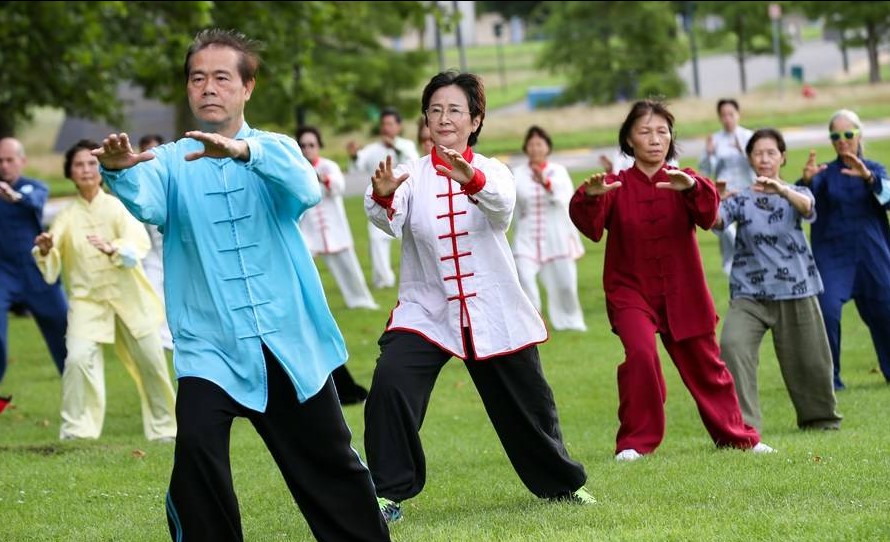
Scientists found that one hour of this Chinese martial art four times a week significantly improved cardiovascular fitness after just six months.
Tai Ji, a gentle Chinese martial art, is more effective than traditional aerobic exercise in lowering blood pressure in adults with pre-hypertension. That's the conclusion of a study conducted by Chinese researchers just published in Jama Open. Pre-hypertension is a borderline phase: recorded blood pressure values are not yet high enough to be classified as hypertension, but still carry significant risks for future cardiovascular problems. Recognizing the importance of early prevention, scientists compared the impact of Tai Ji, known for its diverse health benefits, with more vigorous aerobic activities such as light jogging, brisk walking and cycling.
Tai Chi (often seen in city parks) is an ancient practice of physical and mental exercise that involves a series of movements performed slowly and precisely, accompanied by deep breathing. A traditional Tai Ji session starts with a warm-up part, with very simple movements (shoulder rotation, body and head tilt) followed by other types of exercises that can vary depending on the style followed. The discipline promotes relaxation and balance, reducing the risk of falls and improving overall physical and mental health.
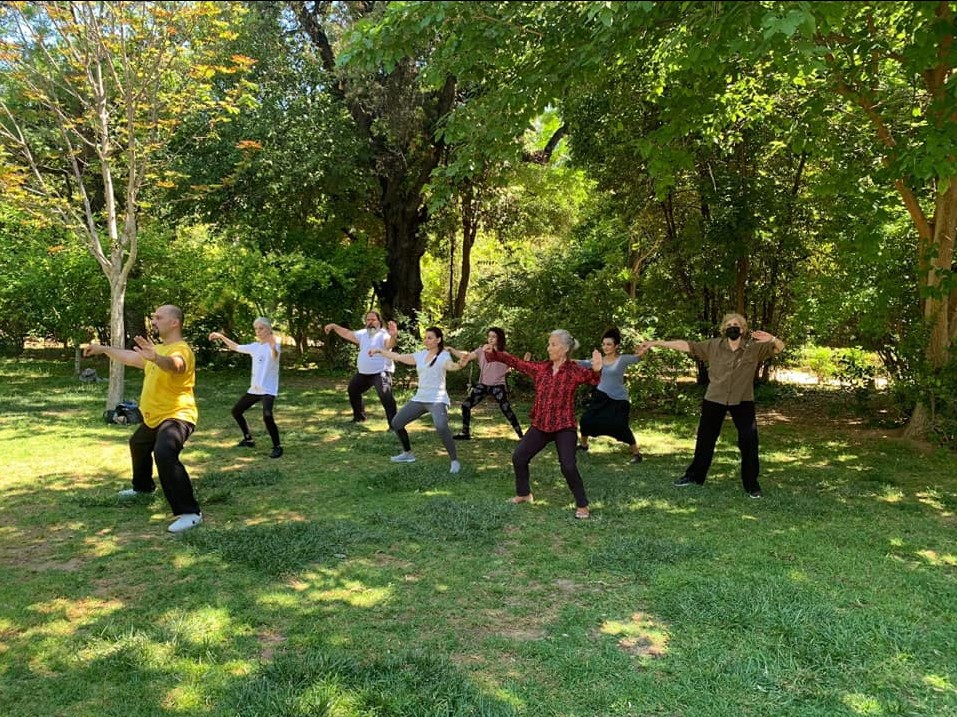
New Chinese study confirms benefits on blood pressure levels. It was conducted in two major hospitals in China between July 2019 and January 2022. This research included 342 participants aged between 18 and 65years (mean age 49 years), all in the pre-hypertension phase, with systolic levels (the maximum pressure)between 120 and 139 mm Hg or diastolic levels (the lowest pressure) between 80 and 89 mm Hg. Researchers from the Chinese Academy of Medical Sciences divided the participants into two groups, one group doing Tai Ji and the other doing aerobic exercises such as stair climbing, jogging, brisk walking and cycling four times a week. Both groups participated in four supervised 60-minute sessions weekly for an entire year.
The biggest benefit at the end of this one-year study was thought to be a reduction in systolic blood pressure, which signals a greater risk of developing hypertension or cardiovascular disease.
The Tai Ji group saw a significantly greater reduction in systolic blood pressure than the aerobic exercise group. Specifically, Tai Ji participants experienced a -7.01 mm Hg reduction in systolic blood pressure, while those in the aerobic exercise group experienced a -4.61 mm Hg reduction. These effects were not isolated to blood pressure measured in the laboratory. In fact, the Tai Ji group also showed superior results in laboratory measurements of 24-hour systolic blood pressure, particularly overnight, suggesting a long-lasting effect.
Tai Chi is a mind-body practice that emphasizes slow, controlled movements, deep breathing, and mental concentration. Unlike aerobic exercise, which can require a large environment (a jogging park or a gym membership to use a stationary bike or treadmill) and carries the risk of joint damage, Tai Ji is low-impact and accessible to people of all ages and fitness levels.
Not only does it help improve physical balance and cardiopulmonary function, it also promotes relaxation, potentially reducing stress levels and therefore blood pressure. The research is not the first of its kind and adds to other medical research moving in the same direction. Like isometric exercises, Tai Ji also fights high blood pressure.


Τι είναι το Tai Ji Quan? Είναι ένας συνδυασμός πολλών πραγμάτων.Είναι σε πρώτο επίπεδο επαφή…

Στις 14 Μαϊου 2022 η Ελληνική Ομοσπονδία Wushu Kung Fu σε συνδιοργάνωση με την Πρεσβεία…

https://www.youtube.com/embed/1jrAo2SAZJA Ο MASTER CHEN BING ΜΙΛΑ ΓΙΑ ΤΟ ΤΑΙ ΤΖΙ ΤΣΟΥΑΝ Η μετάφραση της ομιλίας:…
 EN
EN  EL
EL