

Bai Shi 拜师仪式 is the ceremony when a student becomes a disciple, entering the door into the family or tradition of the master. For most students this is one of the most important rituals they look forward to in their career.
In China this was not limited to martial arts but also to other aspects such as a medicine lineage, or a profession and most traditions was only passed on to the disciples. Sometimes disciples are also called indoor students, because they already officially entered the door into the master’s tradition.
Key Aspects of the Bai Shi Ceremony
- Formal Initiation:
It transitions a student from an "outside student" to an "indoor student," trusting them with the
entire knowledge of the martial art.
- Symbolic Commitment:
The student commits to the master, the lineage, and the martial art system, while the master
commits to passing on all their knowledge.
- Cultural Significance:
It solidifies a student's role in preserving and transmitting the school's traditions and authenticity to future generations.
- Lineage Transmission:
The student is entrusted with the responsibility of carrying the art forward and can use the teacher's name to teach the art themselves.
It is also common that not everyone is able to enter the tradition and become a disciple of the master. The Bai Shi is a ritual with many important details and every tradition has its own standard. Most traditions have bowing in front of the master, serving him/her tea, offering gifts etc. in common.
Η τελετουργία της υπόκλισης λέγεται Ke Tou και γίνεται τρεις φορές. Η προσφορά τσαγιού γίνεται με το μαθητή γονατιστό, λέγοντας «Shi Fu, Qing He Cha» δηλαδή «Δάσκαλε, σε παρακαλώ πιες τσάι». Αυτό μπορεί να γίνει μία έως τρεις φορές, ανάλογα με την παράδοση.
The gifts are given to the master personally and depend on each individual. Many times it issomething special and remarkable. Another important gift is the “Hong Bao” (Red envelope). TheChinese tradition to gift money to the master to pay for future teachings and support himfinancially is a respectful gesture and not limited to the disciple ceremony. Many masters dependon financial support of their students because they would have to spend their time working a full-time job instead of teaching. The amount the student puts into the envelope is also a personaloption. There are numbers to be avoided such as 4, 44,444 and so on. To show respect manystudents put a good amount into the Hong Bao (333,666,888,999 are good numbers). It’s not veryrespectful to give only a small amount to the master from whom the student wants to learn hiswhole life…
The Bai Shi Tie, is another very important part of the ritual. It is a personal declaration of why the student wants to become a disciple and a vow to never break the rules of the tradition. It is a written bond between the master and disciple. The Bai Shi Tie is given to the master who keeps it.
To become a disciple of a certain master depends on the personal fate (or deeds) and can never beforced or bought. If a master can be bought, he is definitely not worth the money. A goodrelationship between a student and the master is the foundation for a future as a disciple. Themaster is like a father, teacher and friend and will help the students to find the right way to masterthemselves and also become a master one day. It then becomes a family matter as you are alsoentering the master’s “family”, therefore you also bow and respect his wife whom you call fromthen on Shī Mǔ.
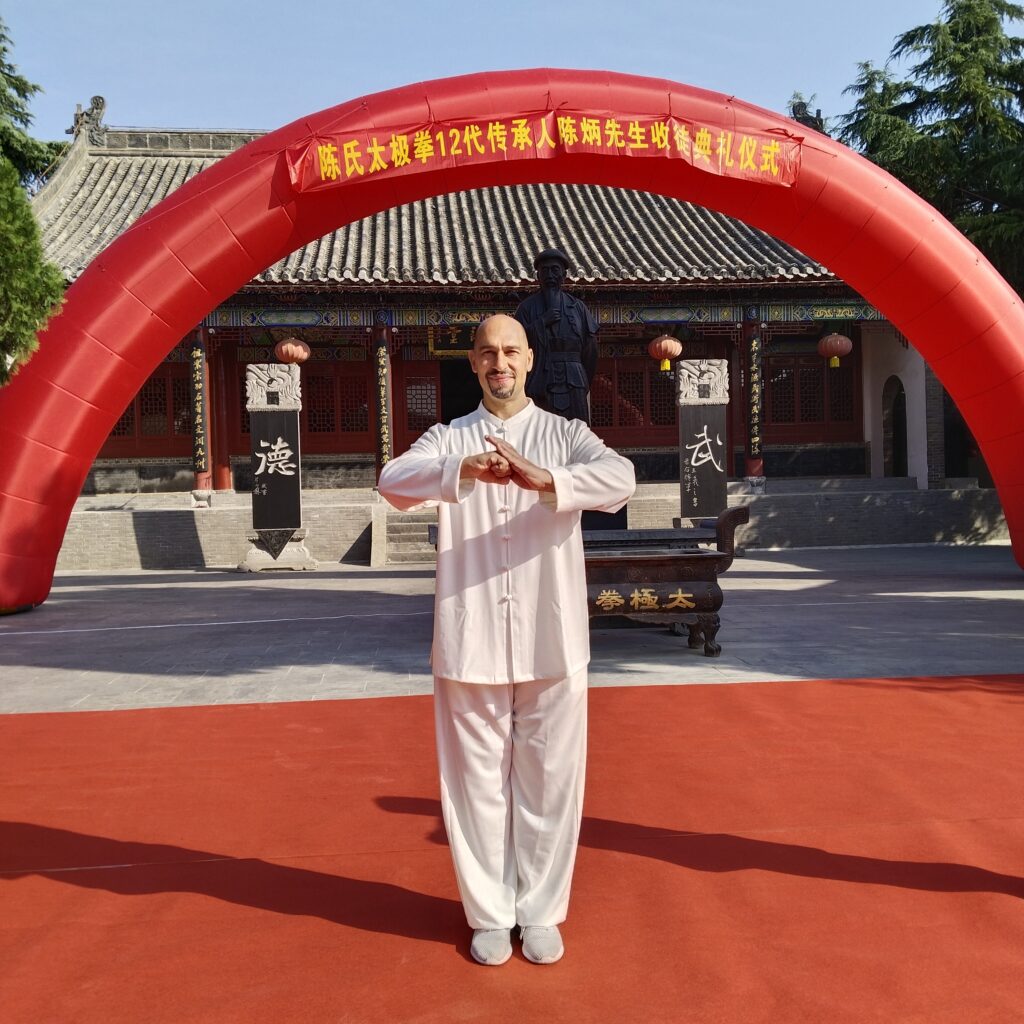
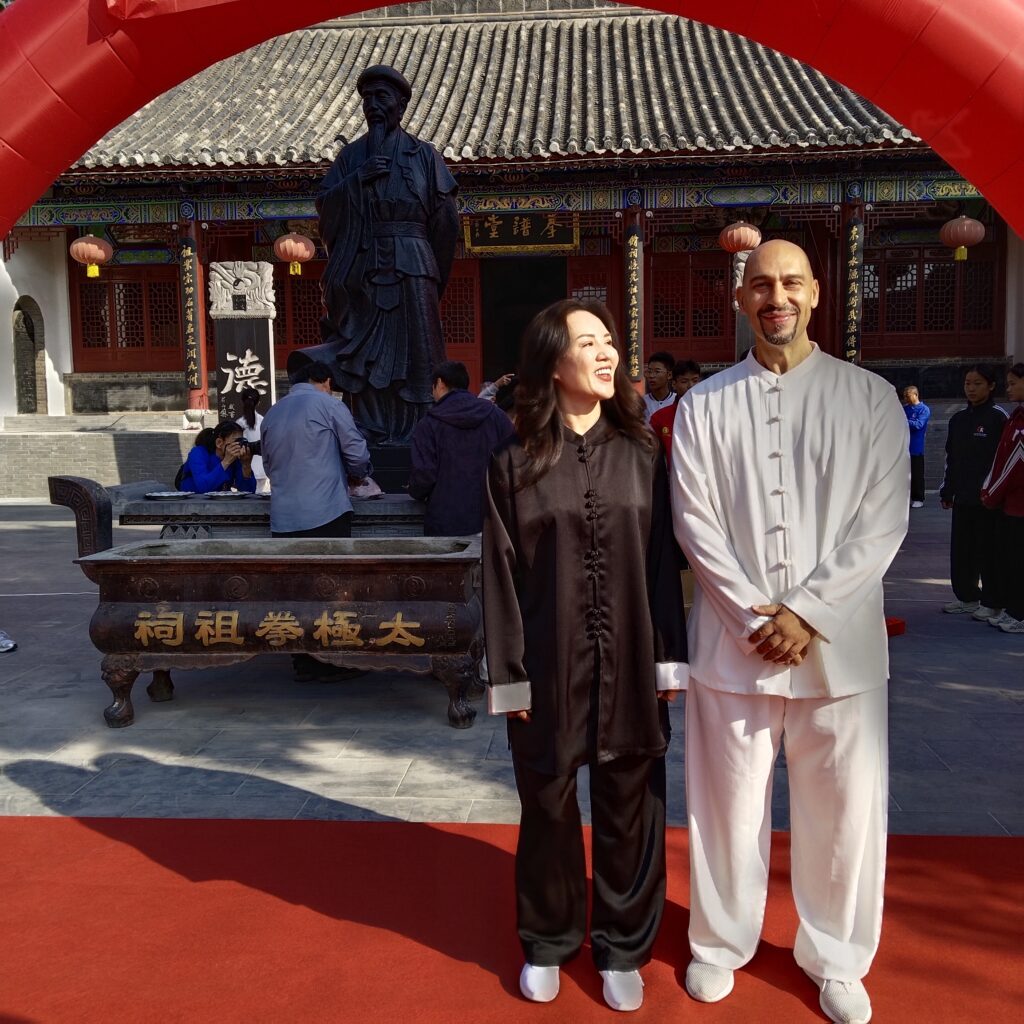
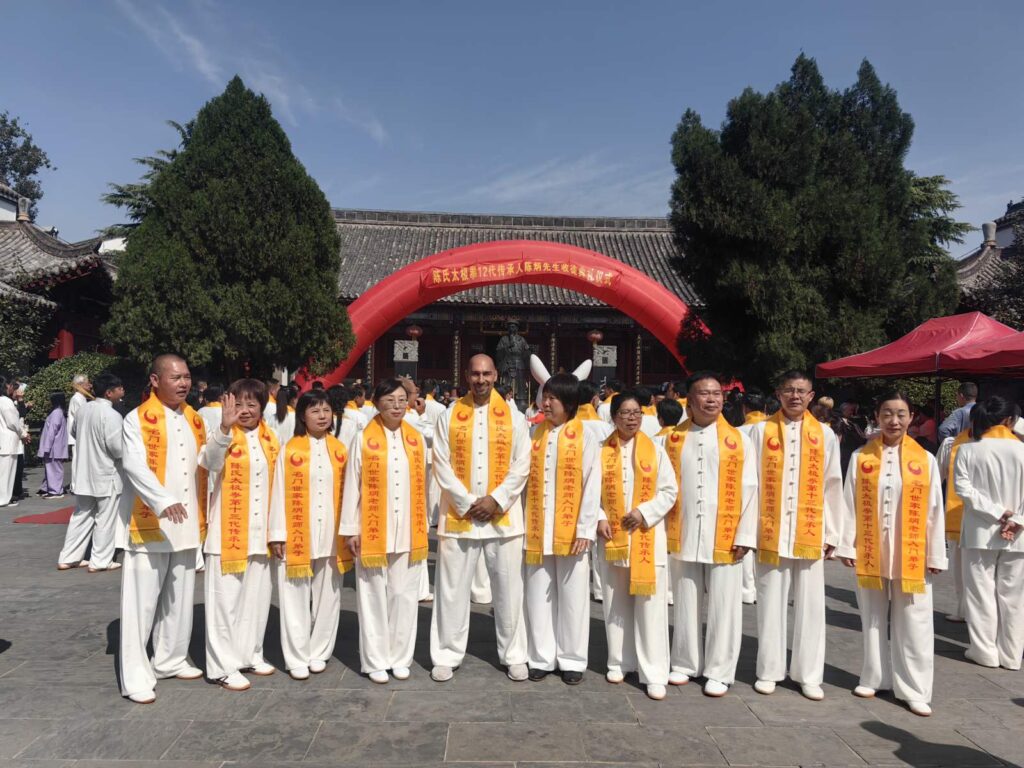
My Bai Shi ceremony happened in October 2024 and it was the first after the COVID era. Usually, the master holds a ceremony every two years or so but due to the circumstances we all, Chinese and foreign disciples to be, gathered this year.
Off course before the ceremony there is a preparation time with your fellow brothers and sisters to be when you are taught the practical part of the ceremony. Everybody is wearing the same attire as all children are the same and the lining is made according to the age as dictated by Chinese customs.
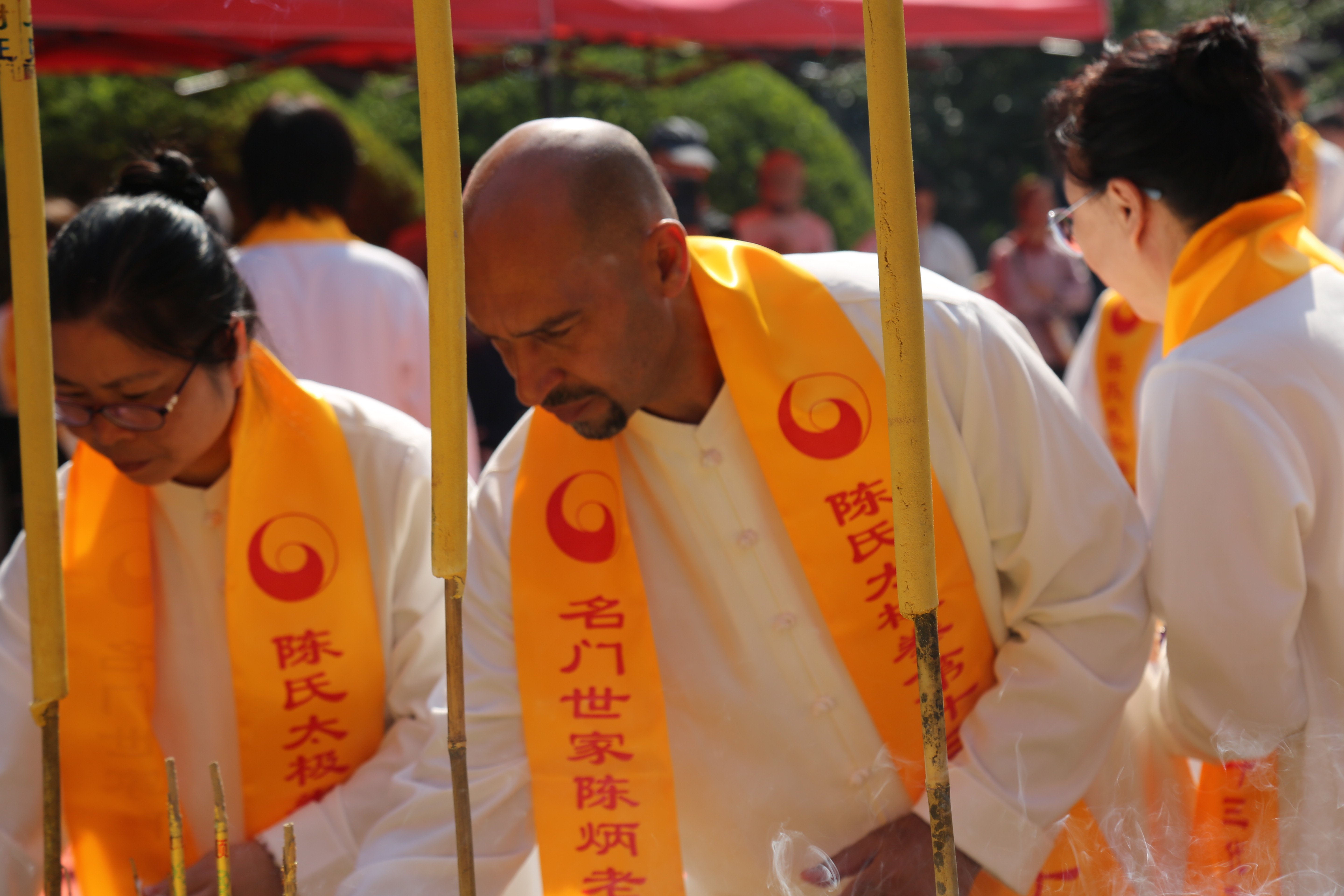
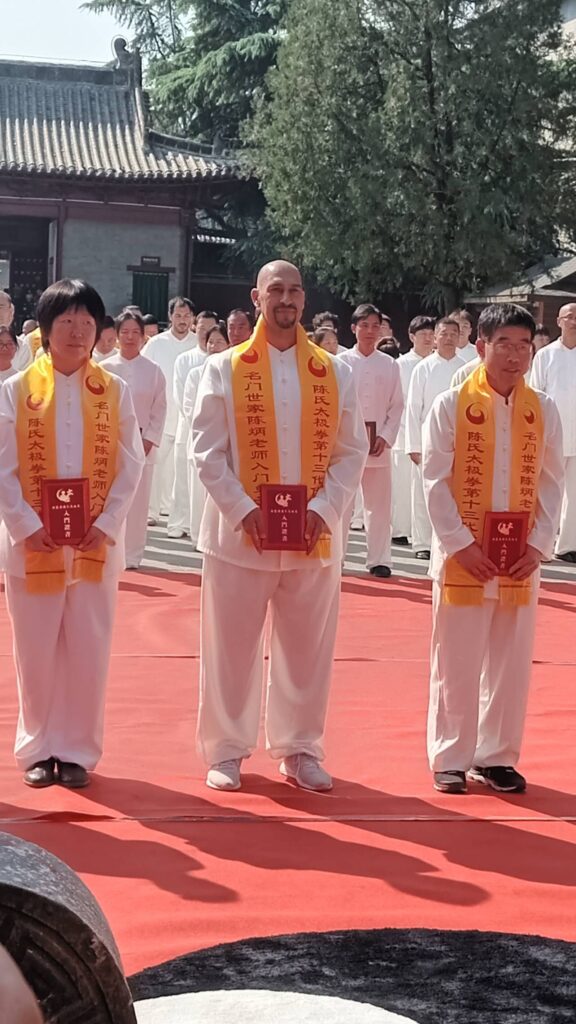
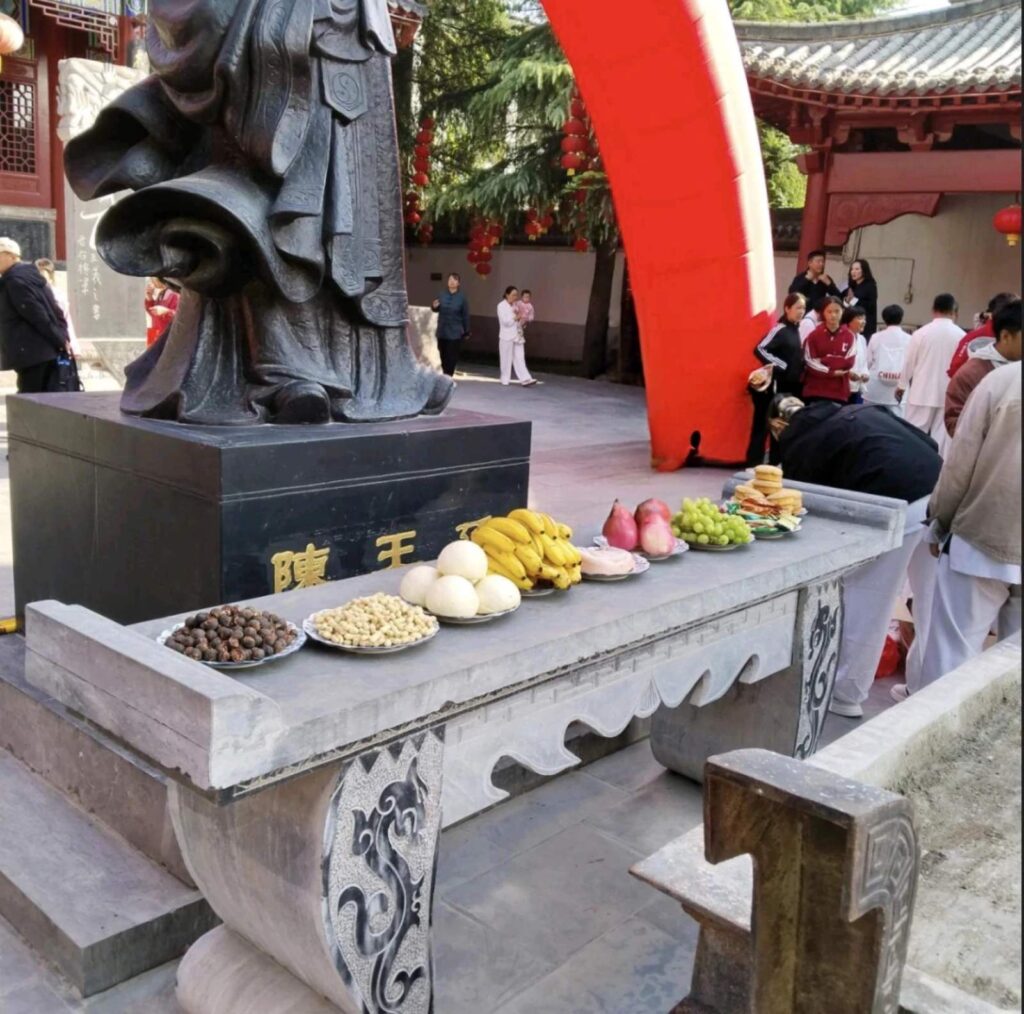
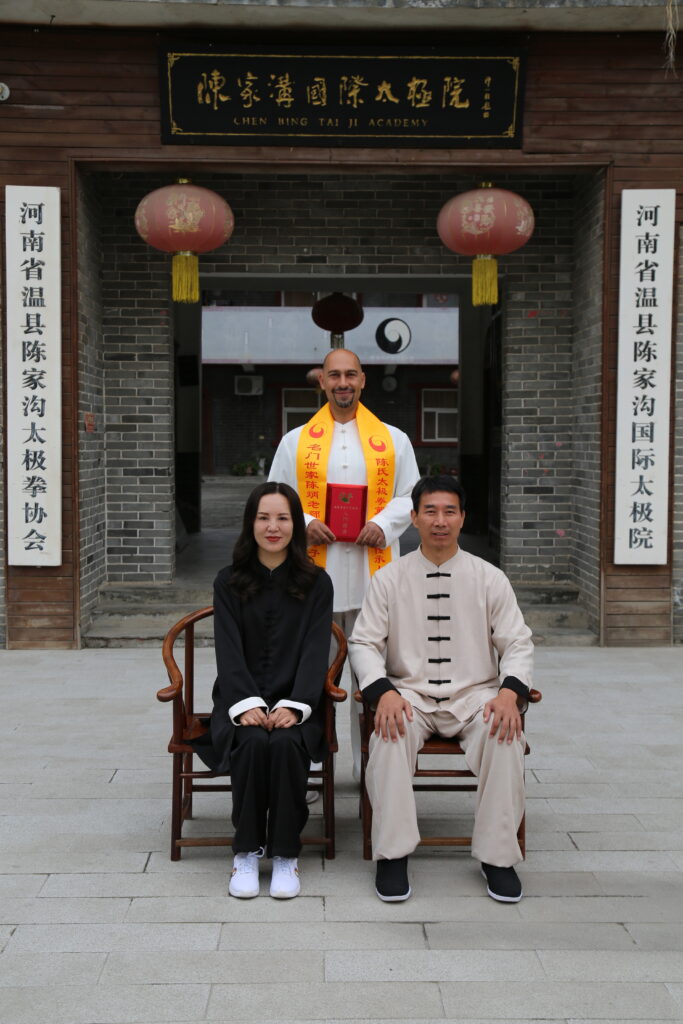
The ceremony took place within the yard of the Taiji Museum at Chenjiagou village, in front of the statue of Chen Wangting the founder of taijiquan and the Chen family tradition. There, in front of the ancestral hall and his statue we bowed and lit incense sticks following the example of Shi Fu and Shi Mu. Then Shi Fu read to us our obligations as disciples and awarded us the golden ribbon and a red booklet.
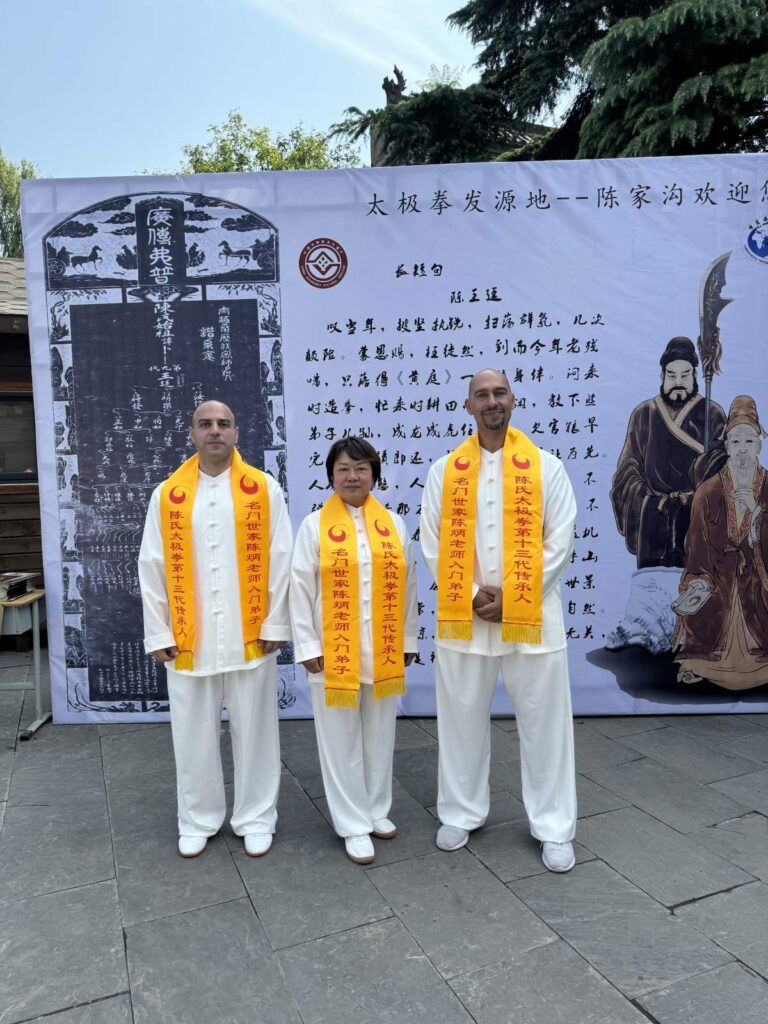
On the golden ribbon is inscribed
“An apprentice of Mr. Chen Bing, a famous family / The 13 th generation inheritor of Chen Style Taijiquan”.
The red booklet has the image of forefather Chen Wangting and outside writes “Chenjiagou Chen Style Taiji – Certificate of Admission”
and inside are written the name, the birthdate, the current living location and the following:
“Day, month, year, I formally take my place as my teacher, Chen Bing, the 12 th generation inheritor of the Chen family Taijiquan from Chenjiagou, Henan, China, to study Chen taijiquan, an intangible cultural heritage of humanity. I vow to remember the rules and teachings of my school, as well as the moral principles of our martial art, to indulge in self-cultivation and enlightenment, to pass on this culture, and to spread it far and wide for the benefit of the world”.
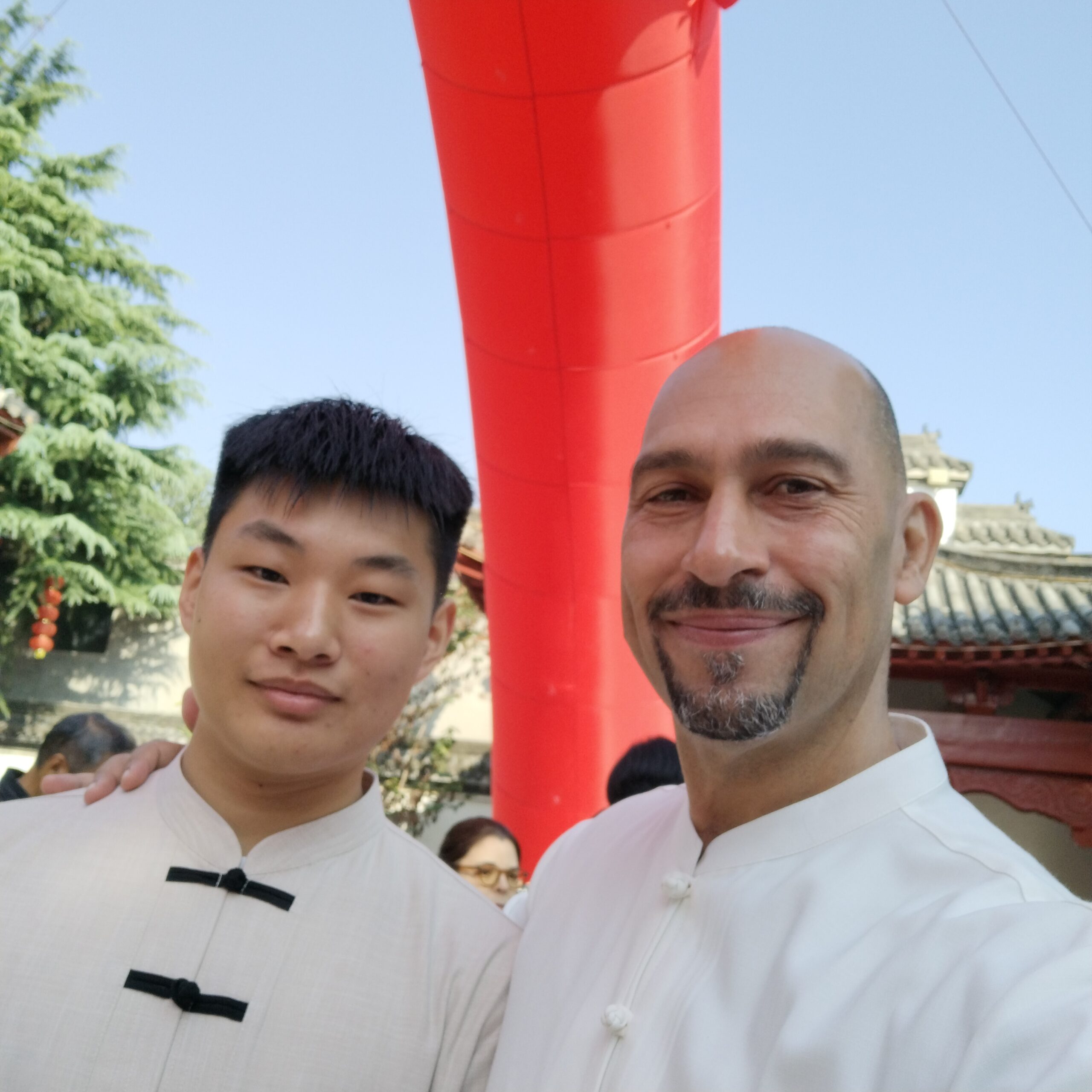
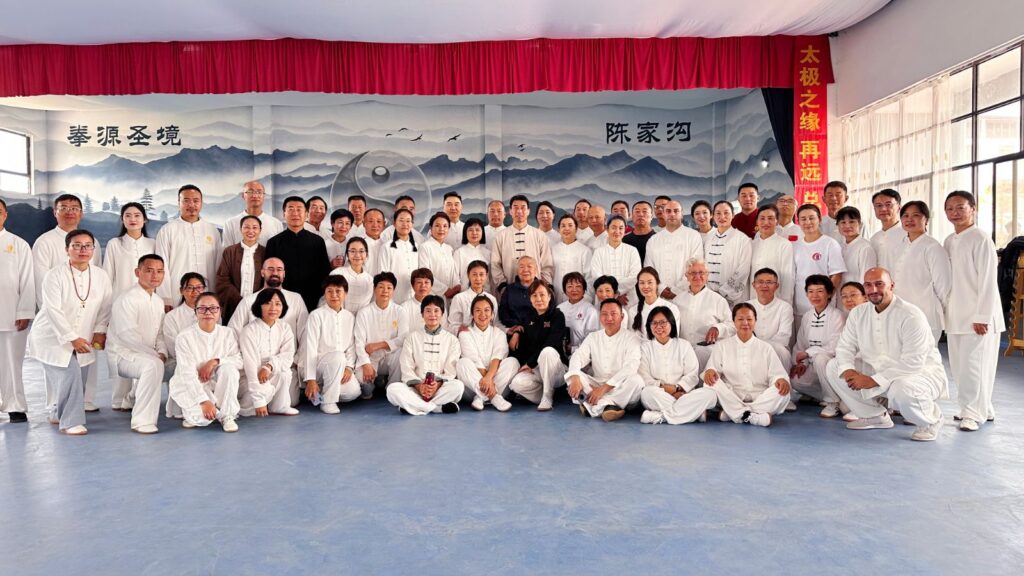
After the completion of the ceremony, we obviously took a lot of pictures with our teachers and fellow disciples. We also performed as a group the 13 move Harmony form leaded by Shi Fu and the elder disciples. Next, we were fortunate to have with us Master Chen XiaoXing, the uncle of Shifu Chen Bing to whom we also bowed as the immediate senior of the Chen family and we took with him some group photos to celebrate this bright day!
You can find in the following link the official video released for our ceremony, perhaps one of the few existing around that can give you an insight of what happened that day and what we experienced:


Τι είναι το Tai Ji Quan? Είναι ένας συνδυασμός πολλών πραγμάτων.Είναι σε πρώτο επίπεδο επαφή…

Μετά από αναμονή 5 ολόκληρων ετών λόγω της πανδημίας που ανέτρεψε τη ροή των πραγμάτων…

Tai Ji για μείωση της αρτηριακής πίεσης: πιο αποτελεσματικό από την αερόβια δραστηριότητα. Οι επιστήμονες…
 EN
EN  EL
EL